
Marco Shelby
Photography Editor
The matchup between Jackson State University and the University of Southern Mississippi was supposed to be about football. It was supposed to be about players battling it out on the field, fans cheering for their schools, and communities coming together. Instead, what I witnessed was something far more profound.
The game was overshadowed by derogatory slurs, racial insults, and an atmosphere that made me, as a student, feel far from welcome.
Even before the game began, the tone was set. A post went viral online about what Jackson State fans “should do” when they came down to Hattiesburg. It was filled with stereotypes and backhanded jokes aimed at our school and the African American community.
It didn’t feel like two Mississippi colleges coming down to battle it out on the field. This matchup left many JSU students and alums feeling targeted by the ugly comments, which were rooted in assumptions about who we are. Reading that post, I couldn’t shake the feeling that the game would be about more than just football, and unfortunately, I was right.
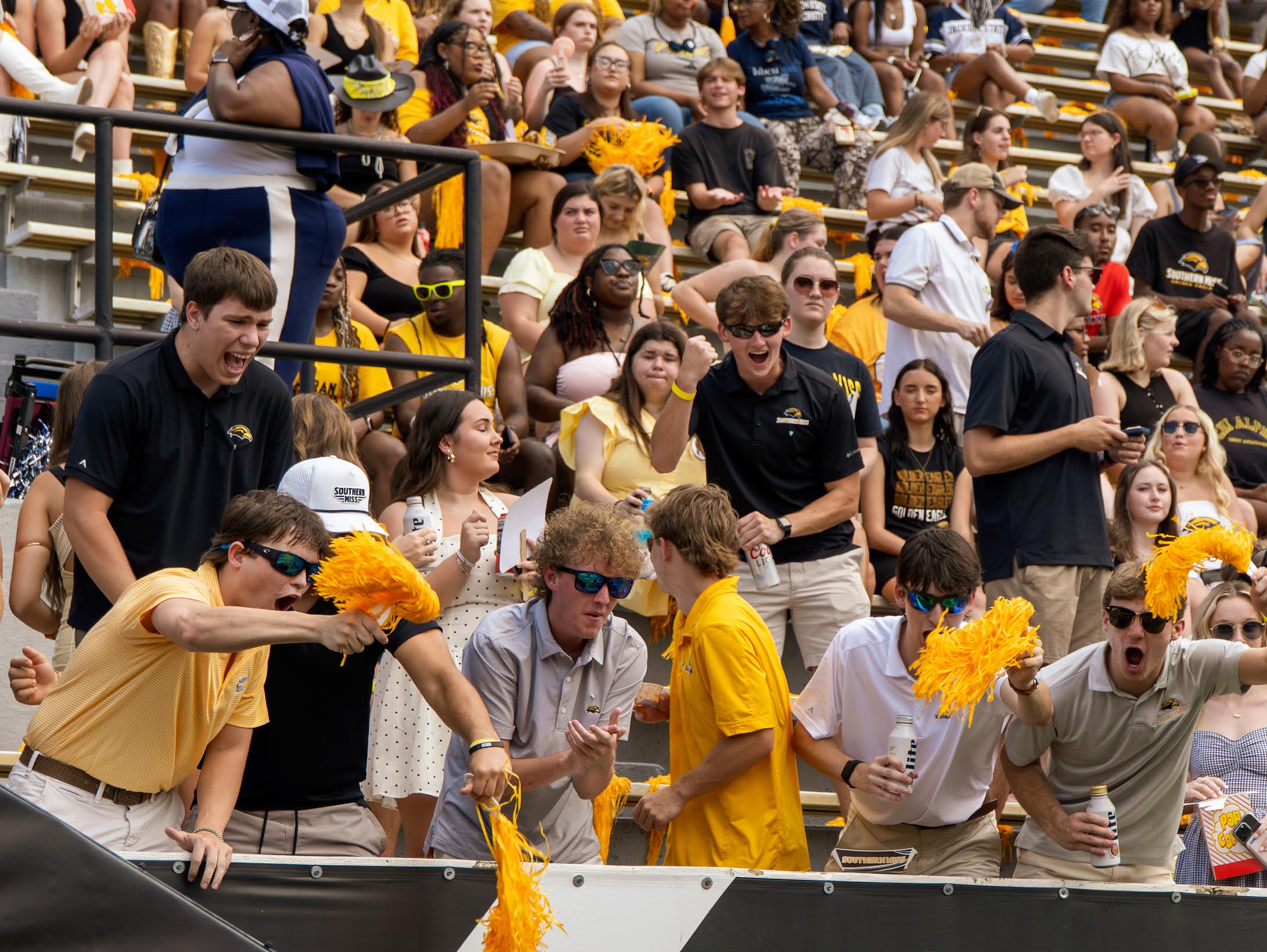
As a student photojournalist with The Blue & White Flash, I was on the sidelines of the field. At the stadium, I heard racial slurs shouted at our players, our staff, and even the equipment team. These weren’t just random outbursts either. They were loud enough to catch attention, repeated enough to sting, and clear enough to make the atmosphere hostile.
I watched as our athletes tried to tune it out, staying focused on the game, but I knew those words hit deeper than any block or tackle on the field. To hear some USM fans yell at young men in such a way to people who had done nothing but show up to represent their school was hard to take in.
The equipment staff and football personnel weren’t spared either. They too became targets of derogatory words. And I won’t mention what was said, but if you know, you know. These are people who dedicate themselves behind the scenes, making sure the team has what it needs to perform, and yet they were singled out for racist verbal abuse.
It showed that the issue wasn’t just with the players wearing the uniform; it was with anyone who represented Jackson State.
What bothered me most wasn’t the words themselves but the lack of response from the USM fans around them, some of whom looked just like the people being ridiculed. Some people laughed, others looked away, while many remained silent. That silence made the insults seem acceptable, as if they were just part of the game-day experience.
I refuse to accept that. The purpose of sports is to bring out passion, not prejudice. Its goal is supposed to showcase school pride, not hatred disguised as rivalry.
As a Jackson State University student, I didn’t feel welcomed at The University of Southern Mississippi. I didn’t feel like I was walking into a space of fair competition and mutual respect.
Instead, the stereotypes in that viral post had spilled over into the stands, shaping the way people looked and talked to us. Rivalries can be fun, but they should never strip people of their dignity.
Still, through it all, I was proud of how our players handled themselves. They maintained their composure, stayed focused on the game, and demonstrated resilience in the face of words meant to shake them. That kind of discipline and pride is something that can’t be broken, no matter how ugly the noise gets.
Pride alone isn’t enough. What happened at this game should be a wake-up call. Universities, athletic departments, and fans all have to do better. We have to create environments where racial slurs and derogatory language are not tolerated, not brushed off, not excused as a “heat of the moment,” but called out for what they are. The next generation of students and fans is watching, and what we allow to happen now in the stands teaches them what we value.
The JSU vs. USM game should be remembered for its plays and the intensity of the fight on the field. Instead, I will remember it for the atmosphere of hostility that extended far beyond the football field. By speaking out, by refusing to stay silent, and by demanding better, we can move toward a future where our athletes and students are respected, not just for how they perform, but for who they are – human beings.

